
HAVELOCK, LINCOLN NE · RAIL SHOP DIST. EST. 1893
Havelock Plumbing Guide: Common Issues in Lincoln’s Historic Railroad Neighborhood
What a former Burlington Railroad shop town — and the pre-1920s housing it left behind — means for the pipes running through your home today.
Quick Overview
Havelock Plumbing Guide
This Havelock plumbing guide walks through the issues most common to homes in Lincoln, NE’s historic railroad neighborhood — aging galvanized pipe, clay sewer lines under rail-era streets, and water heaters well past their expected lifespan — along with the warning signs to catch each one early.
Local History
A Neighborhood Built by the Railroad
Search for a plumber in Havelock, Lincoln NE long enough and you’ll notice something most other neighborhoods in the city don’t have: a real, distinct history that predates Lincoln itself. Havelock wasn’t always part of Lincoln. It started as its own village in the early 1890s, built almost entirely around the Burlington & Missouri River Railroad’s locomotive repair shops, which opened in 1891 and turned Havelock into a working blue-collar shop town nearly overnight.
For three decades, Havelock ran on its own steam — its own bond issues, its own union halls, its own identity, separate from Lincoln a few miles south. That changed after the 1922 national railroad shop strike weakened the local economy, and in 1930 Lincoln annexed Havelock outright.
Havelock is right in the middle of everything — a small town within a city, exactly midway between heaven and hell.— Lincoln historian Jim McKee, paraphrased from local reporting on Havelock’s history
What that history left behind is streets full of the modest cottages and bungalows built for railroad craftsmen and their families. Many of them are still standing, still occupied, and still running on plumbing that’s never been fully modernized. That’s the through line of this guide. If your home still has its original pipes, it’s worth having Plumbers in Lincoln NE inspect them before small problems turn into costly repairs.
What Age Does to a House
Why House Age Predicts Pipe Trouble
A home built in 1910 or 1925 wasn’t plumbed with anything you’d find on a hardware store shelf today. Havelock’s older plumbing systems typically fall into one of three eras, and each one fails in its own predictable way:
- Galvanized steel — the standard for water supply lines from roughly the 1880s through the 1960s.
- Cast iron — used for drain and sewer lines well into the mid-20th century.
- Polybutylene — a plastic pipe used through the 1980s and early ’90s in later renovations, known for failing without warning. We cover this material in detail in our post on polybutylene pipe problems in Lincoln, NE.
None of these were built to last a century, and in a neighborhood where a meaningful share of the housing stock predates 1930, a lot of Havelock homes are simply due.
1891
Havelock Shops open
1930
Annexed by Lincoln
60–100+
Yrs old, typical home
The Usual Suspect
Galvanized Pipe: Havelock’s Most Common Culprit
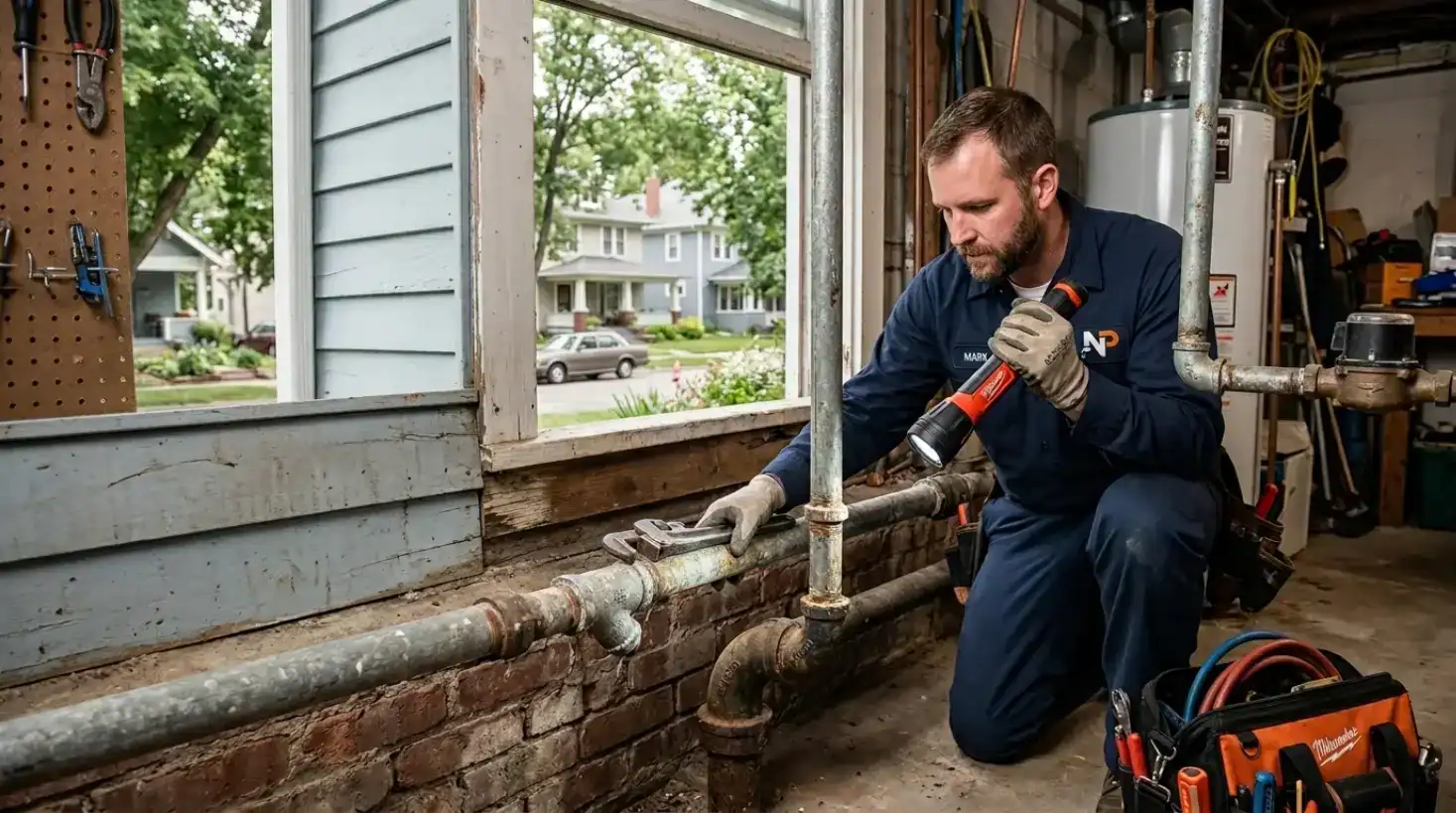
Of everything on this list, galvanized pipe is the one we run into most often on Havelock service calls. It was the standard supply-line material for decades, and unless a previous owner already repiped the house, there’s a good chance it’s still there behind your walls.
Signs your home may still be running on original galvanized steel:
- Water pressure that’s noticeably weaker than a neighbor’s newer home
- Rust-colored or cloudy water, especially first thing in the morning
- A metallic taste or smell coming from the tap
- Pipes that are magnetic to a refrigerator magnet (copper and PEX are not)
If your tap water has an odd smell or taste, we go deeper into likely causes in why Lincoln, NE tap water sometimes smells off.
Underground
Sewer Lines Under Rail-Era Streets
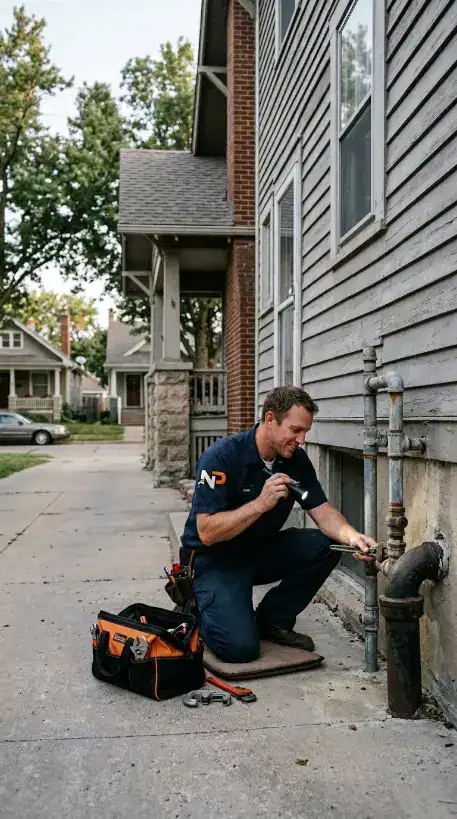
It isn’t just supply lines. Havelock’s mature, tree-lined blocks — planted decades before anyone thought about where root systems would end up — sit on top of aging clay sewer lines and Lincoln’s notoriously dense, expansive clay soil. Roots chase moisture straight into old pipe joints, and shifting clay puts constant pressure on lines that were never designed for it.
We’ve written two deeper guides on exactly how this plays out locally: how clay soil affects sewer lines and the warning signs your sewer line needs repair. Gurgling drains, slow-clearing tubs, or a soggy patch of yard are all worth a camera inspection before they turn into a backup.
Hot Water
Water Heaters in Havelock’s Older Homes
A water heater is rated for roughly 8–12 years, and in a neighborhood built on older housing stock, it’s common to find units well past that window still limping along in a Havelock basement. Lukewarm water, rust-tinged discoloration, or a tank that’s started popping and rumbling are all signs it’s near the end.
See our full breakdown of how long water heaters actually last in Lincoln, NE and the warning signs your water heater is about to fail.
This isn’t unique to Havelock, either — it’s a pattern across Lincoln’s older, pre-annexation neighborhoods. If you’re just south in Bethany, another neighborhood with a similar mix of vintage housing, our team covers the same issues in more depth on our Bethany water heater repair page.
Staying Ahead of It
A Maintenance Rhythm That Actually Works
Almost everything on this list gives some kind of warning before it becomes a full emergency: slow drains before a backup, weak pressure before a pipe fails, lukewarm water before a heater dies outright. An annual inspection is the cheapest insurance against all of it — especially in a neighborhood with as much older housing stock as Havelock.
Our plumbing cleaning and inspection checklist is a good starting point for a walkthrough between professional visits, and our guide on what to do when your basement floods covers the immediate steps if a rail-era foundation and an aging sump pump finally meet a heavy storm.
Common Questions
Havelock Plumbing: Frequently Asked Questions
Related Reading
Keep Exploring
Pipe Materials
Sewer Lines
Water Heaters
Maintenance
Don’t Let a Small Leak Outlive Another Decade
If your Havelock home is showing any of the signs above, NextPlumbers offers licensed, upfront, 24/7 service across the neighborhood — from original 1910s cottages to newer infill builds.