Sewer & Pipe Repair
7 Signs You Need Sewer Line Repair Before Winter Hits Lincoln
Recognizing the right sewer line repair signs early can save you from a much bigger problem. Most sewer issues don’t announce themselves with one obvious symptom — instead, they show up as small, easy-to-dismiss annoyances — a slow drain here, a faint smell there — until Nebraska’s freeze-thaw winter turns a minor issue into a much bigger, much colder repair. Here are the seven to watch for before that happens.
Why winter makes this worse in Lincoln
Nebraska’s frost line typically reaches somewhere between 36 and 42 inches deep during a normal winter — deep enough to affect sewer lines that weren’t buried to full code depth, especially in older homes built before current standards. As the ground freezes and thaws repeatedly through the season, the soil around buried pipes expands and contracts. For a sewer line that’s already got a small crack, a slightly offset joint, or minor root intrusion, that repeated movement is often what turns a manageable issue into a full blockage or collapse — usually at the least convenient moment. If you’re in a historic area like Havelock, check out our Havelock Plumbing Guide for issues specific to that neighborhood’s older housing stock.
The City of Lincoln’s Wastewater Collection System maintains the sanitary sewer mains under city streets — but the lateral line connecting your home to that main is the homeowner’s responsibility, which is exactly why catching these signs early matters before winter makes repairs harder.
36–42″
Nebraska’s typical frost line depth — freeze-thaw cycles at this depth are what turn small, existing sewer line issues into full failures over the course of a winter.
This is exactly why late summer and early fall — before the ground starts freezing — is the ideal window to catch and fix a developing issue, rather than waiting until a mid-winter backup forces an emergency call.
The 7 signs
01
Multiple slow drains at once
One slow drain is usually a local clog. Several slow drains across different fixtures — kitchen, bathroom, laundry — at the same time points to a blockage further down the line, closer to the main sewer connection.
02
Gurgling sounds from drains or toilets
A gurgling noise, especially right after flushing or running water elsewhere in the house, usually means air is trapped and struggling to escape past a partial blockage in the line.
03
Sewage odor, indoors or in the yard
A persistent sewage smell — not a one-time whiff, but a recurring one — often means a crack or break is allowing gas to escape before it should. This is one of the signs worth acting on quickly.
04
Unusually lush or soggy patches in the yard
A patch of grass that’s noticeably greener, or ground that stays soggy without recent rain, can mean a leaking sewer line is fertilizing and saturating the soil above it.
05
Recurring clogs after cleaning
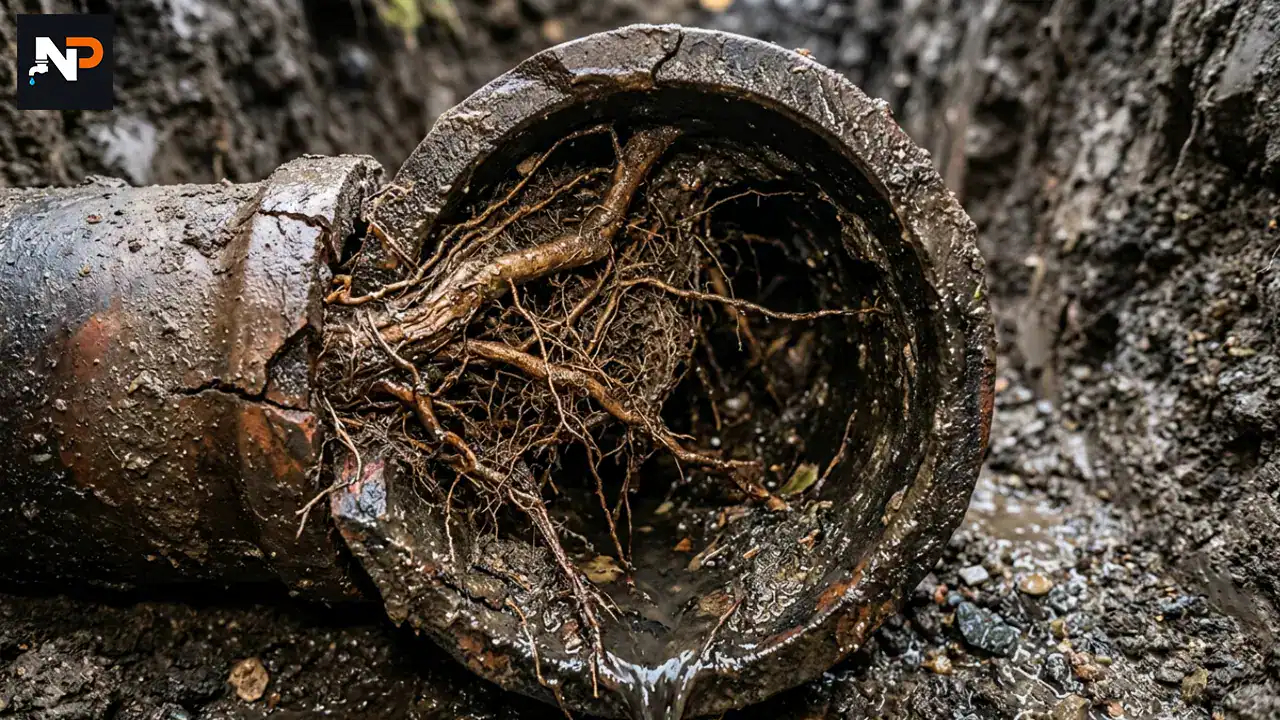
If the same drain clogs again within weeks of being cleared, the underlying cause usually isn’t the drain itself — it’s an offset joint, a belly in the line, or root intrusion further down that keeps catching debris.
06
Water backing up in unexpected places
Running the washing machine and seeing water rise in the shower drain, or flushing a toilet and hearing it affect another fixture, is a classic sign of a main line blockage, not an isolated fixture problem.
07
Visible cracks or settling near the foundation
New cracks in a foundation, or a section of yard that seems to be sinking, can indicate a sewer line issue affecting the soil’s stability nearby — worth investigating alongside any of the signs above, not on its own.
One slow drain is a nuisance. Several slow drains at once is a sewer line telling you something.
What to do if you spot one
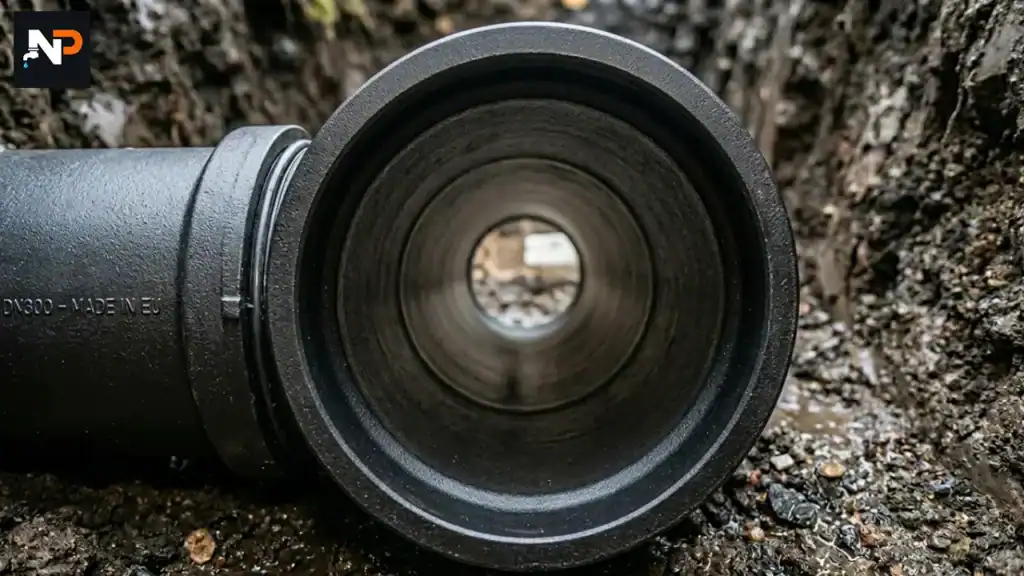
The single most useful diagnostic tool for any of these signs is a camera inspection — it’s the only way to see exactly where a blockage, crack, or offset joint sits along the line, rather than guessing based on symptoms alone.
From there, the right fix depends entirely on what the camera shows:
What a camera inspection can rule in or out
- A simple clog or root mass — often cleared with hydro-jetting, no digging required
- A localized crack or offset joint — sometimes fixable with a trenchless spot repair
- Widespread pipe deterioration — may require a longer trenchless lining or, in more severe cases, excavation and replacement
Worth knowing: the fix that ends up being needed is often far less invasive than homeowners assume going in — a camera inspection first prevents both over-treating a minor issue and under-treating a serious one.
Catching these sewer line repair signs early, ideally with help from local Plumbers in Lincoln NE, rather than waiting for a full backup is almost always the difference between a straightforward fix and an emergency winter excavation.
Frequently asked questions
Related reading
Written by the Next Plumbers Team
Licensed, insured plumbers serving Lincoln, NE and surrounding neighborhoods. We run a camera inspection before recommending any repair — so you know exactly what’s happening underground before deciding what to do about it.
Noticing more than one of these signs?
Get a camera inspection now, before winter freeze-thaw turns a manageable issue into an emergency excavation.
For a full diagnosis and repair, see our complete sewer line repair services in Lincoln, NE, or call now for a same-day inspection.