Hard Water in Lincoln, NE: How It Affects Your Pipes
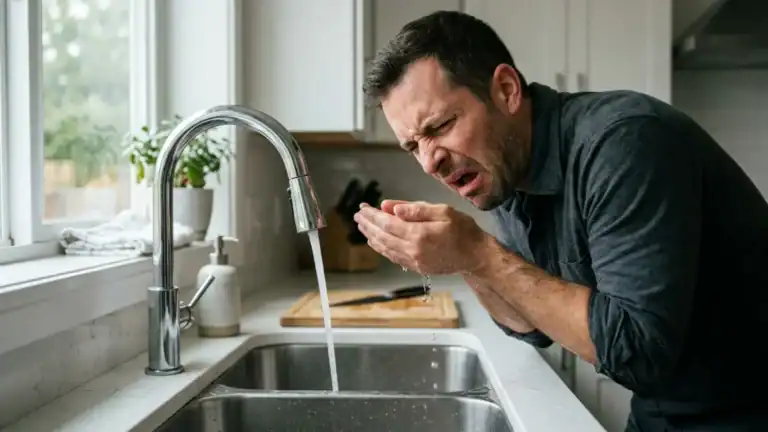
Lincoln, Nebraska has naturally hard water, and you may notice the evidence long before you realize what is happening inside your plumbing. White spots on faucets, mineral deposits around showerheads, soap scum, and reduced water flow can all be signs that calcium and magnesium are building up over time.
According to the City of Lincoln’s 2025 drinking water report, the city’s water averaged 192 parts per million of total hardness, equivalent to 11.2 grains per gallon. The reported range was 10.3 to 12.6 grains per gallon. Lincoln Water System explains that hardness minerals occur naturally in the city’s source water and can cause buildup in plumbing, fixtures, and appliances.
That does not mean Lincoln’s tap water is unsafe. The plumbing concern is different: repeated mineral deposition can create scale inside water-using equipment and plumbing components.
Quick Answer
Hard water in Lincoln can gradually leave mineral scale on fixtures and inside plumbing components. Over time, that buildup can restrict water flow, affect valves and fixtures, and contribute to maintenance problems. The issue is usually gradual rather than an overnight plumbing failure.
What Makes Lincoln, NE Water Hard?
Hard water contains dissolved minerals, primarily calcium and magnesium. These minerals occur naturally as groundwater moves through soil and rock.
Lincoln’s water system gets its source water from groundwater wells near the Platte River. The city treats that water before distributing it to homes and businesses throughout Lincoln.
Lincoln Water System describes hardness minerals as naturally occurring in the city’s source water. Because much of the city’s water supply has a similar hardness level, hard-water effects can occur in homes throughout Lincoln rather than being limited to one neighborhood.
In practical terms, you do not need to see a problem in your drinking water for hard water to affect plumbing. Minerals can remain dissolved while water is flowing, then gradually leave deposits when water evaporates or conditions allow scale to form.
How Hard Water Builds Up Inside Plumbing
The process is gradual. Each individual exposure may leave only a tiny amount of mineral residue, but years of repeated exposure can create a noticeable layer of scale.
Hard-water scale can develop around:
- Faucet aerators
- Showerheads
- Water valves
- Pipe fittings and connections
- Appliance components
- Water heaters
- Other water-using plumbing equipment
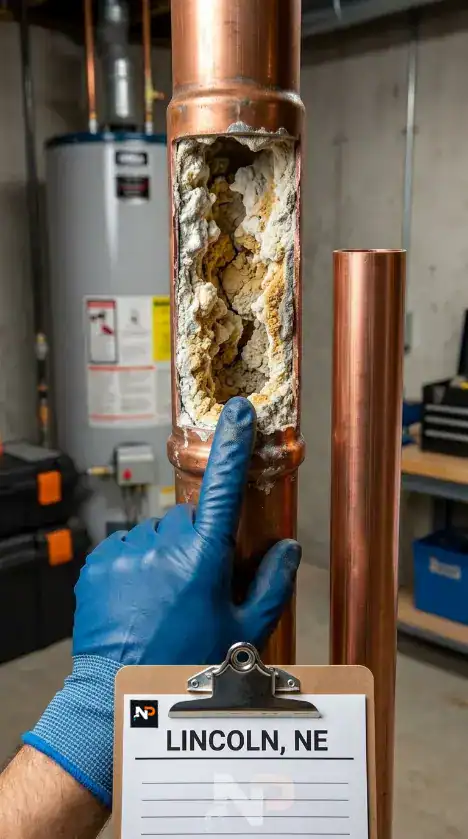
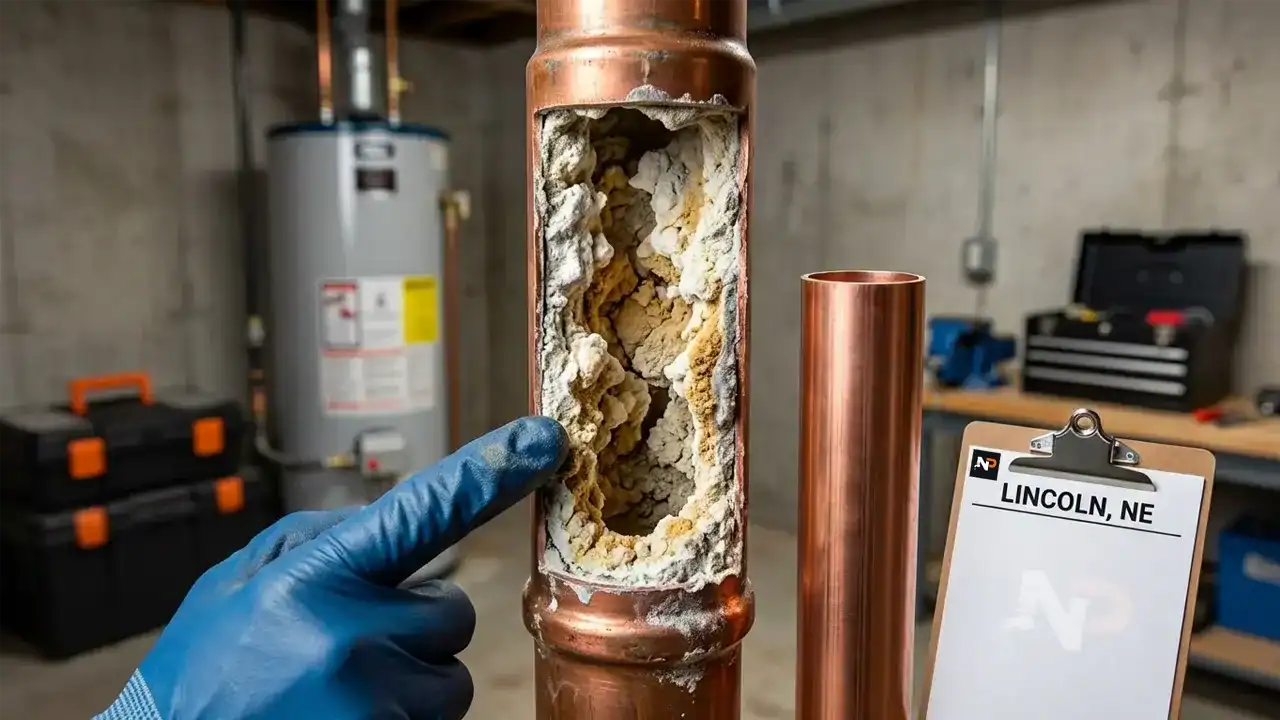
The important distinction is that hard water does not simply mean your pipes are being chemically eaten away. The more common concern is mineral scale accumulating on surfaces and restricting normal water movement or equipment operation.
EPA guidance similarly notes that hard water can cause scale to form inside pipes, water heaters and other equipment. Scale can reduce water flow and decrease heat-transfer efficiency in water heaters.
5 Signs Your Home May Have Hard-Water Buildup
Look for These Common Clues
- White spots around faucets: Chalky deposits can remain after hard water evaporates.
- Reduced flow from a faucet or showerhead: Mineral deposits can restrict small passages and aerators.
- Stiff or problematic valves: Deposits can interfere with normal operation.
- Persistent soap scum: Hard water can make soap residue harder to rinse away.
- Recurring mineral deposits: Repeated buildup after cleaning points to minerals in the incoming water rather than a one-time dirty fixture.
1. White Spots Around Faucets
White or chalky deposits around faucets and fixtures are one of the easiest signs to notice. When water evaporates from a fixture, dissolved minerals can remain behind. Repeated evaporation and drying can make the deposit increasingly noticeable.
2. Reduced Flow From a Faucet or Showerhead
If a faucet or showerhead gradually produces less water, the problem may be related to buildup around the outlet or aerator.
Before assuming that the home’s main water supply is failing, check whether the reduced flow is limited to one fixture. A localized problem can point toward a clogged aerator, showerhead, valve, or fixture component rather than a whole-house plumbing problem.
3. Stiff or Problematic Valves
Valves and other plumbing components can develop mineral deposits over time. A valve that becomes difficult to operate should not simply be forced.
For older plumbing, mineral buildup may exist alongside normal wear, corrosion, or aging components. A plumbing inspection can help determine which issue is actually responsible instead of assuming that hard water is the only cause.
4. Persistent Soap Scum
Hard water reacts with soap and can make it more difficult to rinse away residue. This can leave mineral and soap deposits around showers, tubs and sinks.
This sign does not prove that your pipes have a buildup problem, but when it appears alongside white mineral deposits and fixture-flow issues, it provides another indication that hardness may be affecting the home.
5. Recurring Mineral Deposits on Plumbing Fixtures
If you repeatedly clean white deposits from faucets, showerheads and other fixtures only to see them return, the source is not necessarily the fixture itself.
Because the minerals are coming from the water, cleaning removes the visible residue but does not remove the hardness from the incoming water supply.
Can Hard Water Actually Damage Your Pipes?
This is where the wording matters.
Hard water is better understood as a scale and maintenance problem than as a substance that automatically destroys every type of pipe.
Mineral scale can accumulate inside plumbing and restrict the available space for water to move. EPA guidance notes that scale can reduce flow through pipes and fixtures. Valves, faucets, water heaters and appliances can also require more frequent cleaning or replacement when scale becomes significant.
But a slow faucet, low water pressure, or old pipe should not automatically be blamed on hard water.
- Partially closed shutoff valves
- Clogged faucet aerators
- Old or corroded plumbing
- Pipe corrosion
- Leaks
- Pressure-regulating equipment
- Problems with the home’s water service
- Localized plumbing blockages
Important: Hard water can contribute to scale, but it is not an explanation for every plumbing failure. Diagnosing the actual cause first helps prevent unnecessary repairs or water-treatment expenses.
Why Hard Water Can Affect More Than Your Pipes
Your plumbing system is connected to multiple water-using appliances and fixtures. Mineral scale can therefore become an equipment-maintenance issue as well as a plumbing issue.
Water heaters: Mineral deposits can accumulate in water-heating equipment and reduce efficiency. If your primary concern is an aging or malfunctioning water heater, see our dedicated Water Heater Repair in Lincoln, NE guide rather than treating every water-heater problem as a hard-water issue.
Faucets and showerheads: Small passages and screens can become restricted by mineral deposits, producing weaker flow.
Valves and plumbing components: Mineral deposits can interfere with normal operation and increase cleaning or maintenance needs.
Does Lincoln’s Hard Water Mean You Need a Water Softener?
Not necessarily.
The City of Lincoln says the decision to use a water softener is a matter of personal preference. The city also explains that hardness minerals are not considered a health concern and that softeners can reduce mineral buildup and the amount of soap needed for cleaning and bathing.
That means the decision should be based on your home’s actual needs rather than the assumption that every Lincoln homeowner must install a softener.
A softener may be worth investigating if you are experiencing persistent scale on fixtures, frequent mineral buildup, or problems associated with hard water throughout the home.
However, water softeners also require maintenance and use water during regeneration. EPA WaterSense recommends considering water- and salt-efficient equipment and maintaining the system properly.
Water Softener vs. Plumbing Repair: They Are Not the Same Thing
This is an important distinction for homeowners.
A water softener addresses the hardness of incoming water. It does not automatically repair a leaking, severely restricted, or deteriorated pipe.
For example, if a faucet has weak flow because its aerator is clogged with mineral deposits, cleaning or replacing the aerator may solve the problem.
If the problem is a severely restricted section of older plumbing, installing a softener may help prevent additional scale but will not necessarily restore the pipe to its original condition.
If you already have a significant plumbing problem, diagnose the plumbing problem first. Then consider whether reducing water hardness could help prevent additional scale-related maintenance.
How to Reduce Hard-Water Buildup in Your Lincoln Home
Clean Faucet Aerators and Showerheads
Follow the fixture manufacturer’s cleaning instructions. Lincoln Water System notes that showerheads can be cleaned with vinegar or other appropriate descaling products.
Watch for Changes in Water Flow
A gradual reduction in flow can be easier to overlook than a sudden plumbing failure. Pay attention when one fixture begins performing differently from the others.
Maintain Your Water Heater
Hard water can contribute to mineral accumulation in water-heating equipment. Follow the manufacturer’s maintenance recommendations and investigate unusual noises, reduced hot-water performance, leaks, or other warning signs.
For water-heater-specific problems, use our Lincoln water heater repair guide rather than assuming that hardness is the sole cause.
Consider Water Testing or Hardness Information
If you are considering a treatment system, start with actual water-hardness information rather than guessing. Lincoln Water System publishes current water-quality and hardness data that can provide a useful starting point.
Do Not Ignore Persistent Plumbing Changes
If cleaning a fixture does not restore normal flow, or if several fixtures begin showing the same problem, the issue may extend beyond surface mineral deposits.
At that point, a plumbing professional can help determine whether the cause is scale, corrosion, a valve problem, a leak, or another restriction.
Hard Water and Older Lincoln Homes
Hard water does not affect every plumbing system in exactly the same way.
The condition and material of the plumbing matter. An older home with aging pipes may respond differently to mineral buildup than a newer home with modern plumbing materials.
This is one reason it is risky to diagnose a plumbing problem from hard-water symptoms alone.
For example, low flow at one faucet could be a simple aerator problem. Low flow throughout the property could point toward a different issue. Repeated leaks may have another cause entirely.
The useful question is not simply, “Does Lincoln have hard water?” It does. The more useful question is, “What is causing the plumbing problem in this particular home?”
When Hard-Water Buildup Becomes a Plumbing Problem
Mineral residue on a faucet is usually a maintenance issue. A persistent reduction in water flow, a malfunctioning valve, repeated fixture problems, or evidence of a significant restriction deserves closer attention.
Consider a Plumbing Evaluation When:
- Several fixtures develop reduced flow at the same time.
- Cleaning an aerator or showerhead does not restore normal flow.
- A valve becomes unusually difficult to operate.
- You notice recurring mineral deposits along with plumbing performance changes.
- Your water heater develops performance problems or unusual noises.
- You suspect an internal pipe restriction.
- You see leaks, corrosion, or water damage.
The goal is to identify the actual plumbing cause rather than automatically replacing equipment or installing water treatment.
Hard Water in Lincoln, NE: What Homeowners Should Remember
Lincoln’s water is naturally hard, with the city’s 2025 report showing an average total hardness of 11.2 grains per gallon. The City of Lincoln also explains that hardness minerals can cause buildup on plumbing, fixtures and appliances while noting that the minerals themselves are not considered a health concern.
For homeowners, the practical issue is scale.
Hard-water minerals can gradually collect on fixtures and inside plumbing-related components. Over time, that buildup can contribute to restricted flow and increased maintenance, particularly when it combines with aging equipment or other plumbing problems.
But hard water is not an explanation for every plumbing failure.
If you notice mineral deposits, start with the simple signs: clean affected fixtures, monitor water flow, follow appliance maintenance instructions, and use Lincoln Water System’s published hardness information when evaluating water-treatment options.
If a plumbing problem persists, have the underlying cause identified by experienced Plumbers in Lincoln NE before assuming that a water softener or pipe replacement is the answer.
Frequently Asked Questions
Have a Plumbing Problem That Won’t Go Away?
Hard-water buildup is only one possible explanation for reduced flow, fixture problems, or other plumbing changes. If cleaning or routine maintenance does not solve the issue, the next step is identifying the actual cause.