
Drain Cleaning
DIY Drain Cleaning vs Calling a Plumber: When Each Makes Sense
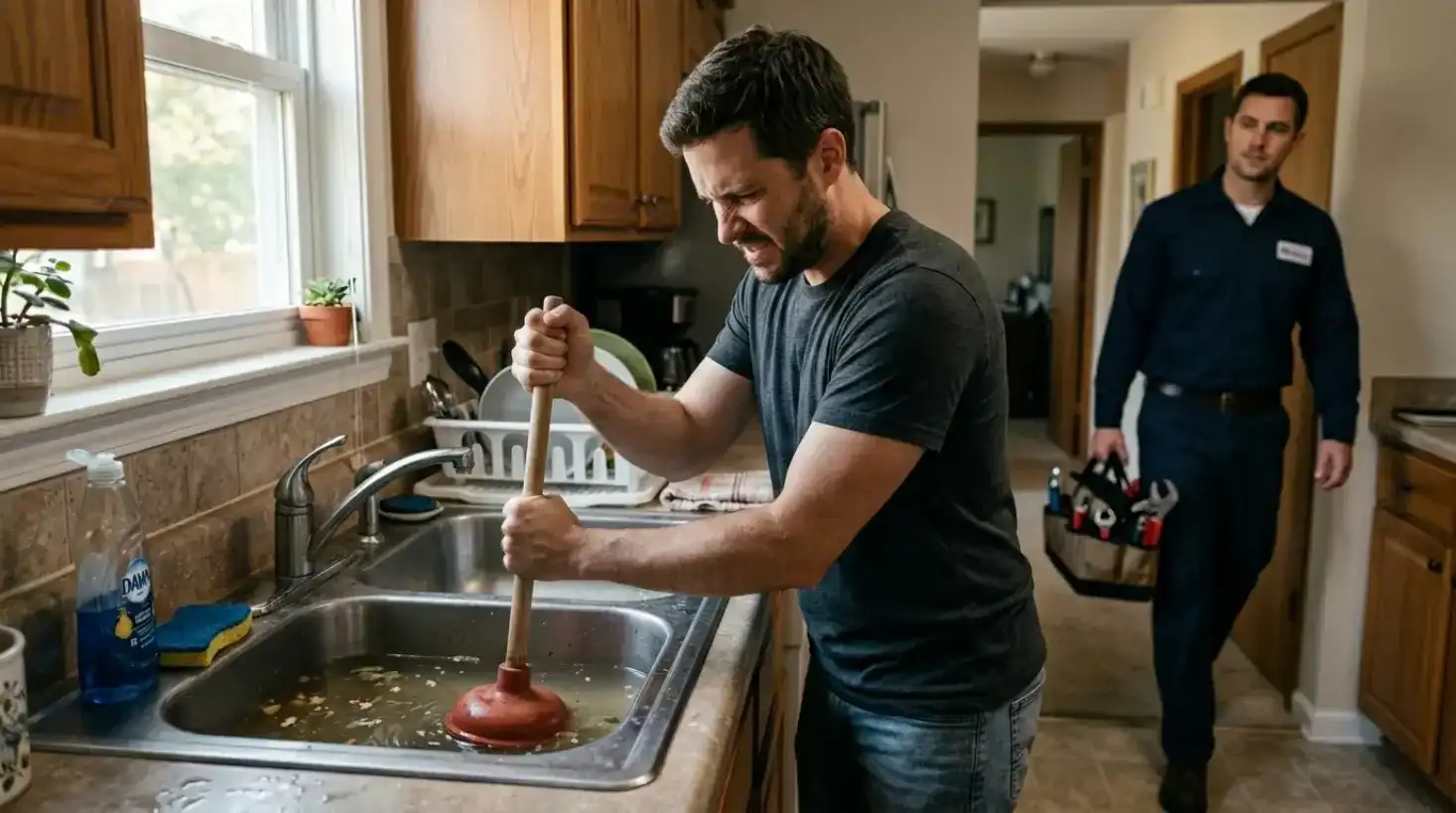
There’s no single right answer to DIY drain cleaning vs plumber — some clogs genuinely take five minutes and a plunger, and calling anyone for them would be a waste of money. Others look simple on the surface but are early warning signs of something bigger, where DIY attempts just delay a real fix. Here’s how to actually tell the difference.
On This Page
When DIY actually works
Most single-fixture, surface-level clogs are genuinely fine to handle yourself. A few methods that work reliably, without any downside:
Safe, effective DIY methods
- A plunger — still the most effective first step for a single clogged toilet or sink, no risk to your pipes
- A hand-crank drain snake (auger) — works well for hair and soap buildup within the first few feet of a drain
- Hot water and dish soap — genuinely helpful for grease-related kitchen sink slowdowns, since it helps break down and flush grease before it hardens
- A drain strainer — prevention rather than a cure, but the single easiest way to stop hair and food debris from causing clogs in the first place
If one of these clears the clog and it doesn’t come back within a few weeks, that’s a genuinely resolved issue — no need to call anyone.
Why chemical drain cleaners are usually a bad idea
This is the one place we’ll give advice that runs against a very common instinct: skip the chemical drain cleaner from the store. Here’s the honest reasoning, not just a warning label repeated back to you.
Chemical drain cleaners generate heat through their chemical reaction, which can soften and warp PVC pipes and accelerate corrosion in older metal pipes. They also frequently only partially clear a blockage — enough to let water flow again, without actually removing what’s causing the clog, so it often returns within weeks.
The EPA’s household hazardous waste guidance also flags common drain and cleaning products among items that need careful handling and disposal — another reason to think twice before reaching for one as a first resort.
There’s also a practical downside specific to calling a plumber afterward: if a chemical cleaner didn’t fully work and you need to call for help, the leftover chemical residue in the pipe can make it unsafe for a plumber to physically work on the drain right away, sometimes delaying the actual fix further.
A chemical drain cleaner treats the symptom for a few weeks. It rarely treats the actual cause.
When it’s genuinely time to call a plumber
A few clear signals that DIY isn’t going to solve the underlying problem:
|
Situation |
What it usually means |
|---|---|
|
The same drain clogs again within days of clearing it |
The DIY fix cleared symptoms, not the cause |
|
Multiple drains are slow or backed up at once |
Likely a main line issue, not a single-fixture clog |
|
Gurgling sounds from other fixtures when you run water |
Air trapped behind a blockage further down the line |
|
A plunger or snake makes no difference at all |
The blockage may be deeper or more severe than DIY tools can reach |
|
You’re dealing with an older home with clay or cast-iron pipes |
Root intrusion or pipe deterioration is more likely, and needs a camera to confirm |
If you’ve tried a safe DIY method once and it didn’t work, that’s the right moment to call rather than escalating to a chemical cleaner or repeated attempts — persistence at that point usually means the tool isn’t the right one for the problem.
What a professional actually does differently
The core difference isn’t just “bigger tools” — it’s diagnosis before treatment. A camera inspection shows exactly where and what the blockage is, rather than guessing. From there, the right method depends on what’s actually found:
- Hydro jetting — high-pressure water that scours the full diameter of the pipe clean, removing buildup a snake would just push past rather than remove
- Targeted mechanical clearing — for root intrusion or a specific blockage identified by camera
- An honest “this doesn’t need us” answer — sometimes the diagnosis confirms a simple fix is genuinely enough, and we’ll tell you that rather than recommending unnecessary work
DIY drain cleaning vs plumber: the bottom line
If a plunger or basic drain snake clears it and it doesn’t come back, you’ve made the right call going DIY. If it returns, spreads to other drains, or a chemical cleaner starts looking tempting — that’s the signal to stop and call instead.
Frequently asked questions
Written by the Next Plumbers Team
Licensed, insured Plumbers in Lincoln NE, serving the city and surrounding neighborhoods. We’ll tell you honestly when a $10 plunger is all you need, not just when it’s time to call us.
Tried the DIY route and it’s still not fixed?
We’ll run a camera inspection, tell you exactly what’s happening, and fix it right the first time — no guessing, no unnecessary work.Call (402) 402-6816