Sewer & Pipe Repair
How Lincoln’s Clay Soil Affects Your Sewer Line
Most sewer line problems get blamed on tree roots or old pipe — and often that’s exactly right. But underneath a lot of these clay soil sewer line problems in Lincoln is something homeowners rarely think about at all: the ground itself is quietly moving, year-round, and it’s been putting pressure on buried pipe the entire time you’ve lived there.
What makes Lincoln’s soil different
Eastern Nebraska sits on a mix of clay-rich glacial till and windblown loess deposits left behind from the last glacial period. Within that soil, a specific type of clay mineral — montmorillonite, part of the smectite group — is what causes the real problem. This mineral has an unusually high capacity to absorb water into its own structure, which means the clay itself physically swells when wet and shrinks when it dries out, sometimes by several percent of its original volume according to USGS expansive soils data.
This isn’t unique to any one Lincoln neighborhood — it’s a regional characteristic of the soil across the area, which is exactly why South Lincoln’s clay-heavy soil shows up as a recurring theme across so much of the city’s plumbing and foundation work, not just one part of town.
How This Actually Causes Clay Soil Sewer Line Problems
A sewer line runs through this shifting soil for its entire length, and the movement doesn’t happen gently or once — it’s a repeating cycle. As the surrounding clay swells and contracts, it applies uneven pressure along the pipe, which over years can:
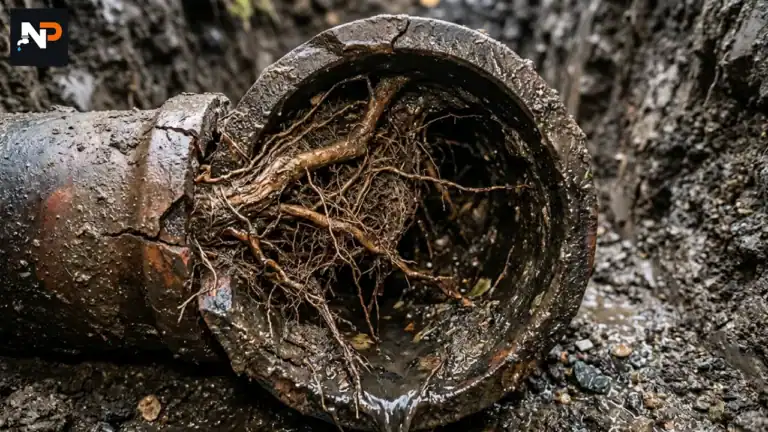
- Separate pipe joints slightly, creating small gaps where roots can enter or waste can leak out
- Create low spots (“bellies”) in the line where the pipe has settled unevenly, allowing waste and debris to collect instead of flowing through
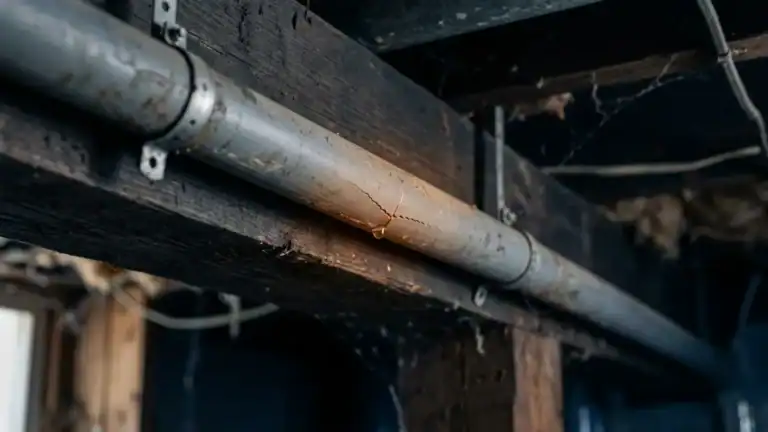
- Misalign older, rigid pipe materials — particularly clay tile and cast iron, which don’t flex the way modern materials do
Up to 10%+
The volume change highly expansive clay can undergo between wet and dry conditions — force applied gradually and repeatedly against anything buried in it, sewer lines included.
The seasonal cycle behind it
This isn’t a one-time event — it’s an annual pattern tied directly to Nebraska’s weather:
| Season | What’s happening in the soil |
|---|---|
| Spring | Heavy rain saturates the clay, causing it to swell and press against buried pipe |
| Summer | Continued moisture, though evaporation and plant root uptake begin to dry the soil |
| Fall | Drying continues, soil begins to shrink and pull away from pipe surfaces |
| Winter | Freeze-thaw cycles add a second, separate stress on top of the shrink-swell pattern |
Winter adds a second mechanism on top of this. Nebraska’s frost line reaches roughly 36 to 42 inches deep in a typical winter — Lincoln’s own building code sets frost protection depth requirements accordingly — and repeated freezing and thawing at that depth can further stress joints already weakened by the clay’s seasonal movement.
Which pipes are most at risk
Not every sewer line is equally vulnerable. The pipes most likely to develop real problems from this soil movement are:
Higher-risk pipe types and situations
- Original clay tile pipe — common in homes built in the early-to-mid 1900s, rigid and prone to joint separation
- Cast iron sewer lines — also rigid, and susceptible to corrosion that compounds the effect of soil movement
- Homes with a century or more of cumulative soil movement — the effect compounds over decades, which is why older neighborhoods like Havelock face this often. See our Havelock Plumbing Guide for the full picture.
- Lines with existing minor damage — soil movement doesn’t usually create a problem from nothing; it tends to worsen an existing small crack or loose joint
If you’re noticing recurring clogs or slow drains and want to understand whether this might be the underlying cause, our guide on signs you need sewer line repair walks through the specific symptoms worth watching for.
Because root intrusion tends to worsen once the ground freezes, before winter, run through this fall plumbing checklist to catch early warning signs while repairs are still straightforward.
What actually helps
The clay itself isn’t going anywhere — the shrink-swell cycle is a permanent feature of the region’s geology. What actually makes a difference is how a line is installed, bedded, and repaired:
- Modern flexible pipe materials like PVC tolerate soil movement far better than rigid clay tile or cast iron
- Proper bedding and backfill around the pipe, done to spec, reduces how directly soil movement transfers force onto the pipe itself
- Trenchless pipe lining creates a continuous, jointless pipe within the existing line — removing the separated joints that are usually the actual point of failure
- Routine camera inspection catches early joint separation or bellying before it becomes a full blockage or collapse
The soil isn’t going to stop moving. The question is whether your pipe is built to move with it, or fight it.
Frequently asked questions
Related reading
Sewer Line Guide
7 Signs You Need Sewer Line Repair Before Winter Hits Lincoln →
Neighborhood Guide
Written by the Next Plumbers Team
Licensed, insured plumbers serving Lincoln, NE and surrounding neighborhoods. We run a camera inspection before recommending any repair — so you know exactly what the soil has and hasn’t done to your line.
Recurring clogs with no obvious cause?
Soil movement is one of the most overlooked reasons behind repeat sewer issues. A camera inspection tells us exactly what’s happening underground.
Not sure if clay soil is behind your recurring clogs? Contact our licensed Plumbers in Lincoln NE, to schedule a camera inspection and find out for sure.