Plumbing Cleaning & Inspection Checklist
Plumbing Cleaning & Inspection Checklist
Protect your home and budget with our professional plumbing cleaning & inspection checklist. Expertly crafted by our licensed Lincoln plumbers, this guide helps you spot minor issues before they become costly emergencies. Keep your Lancaster County home running smoothly with these essential seasonal maintenance tips.
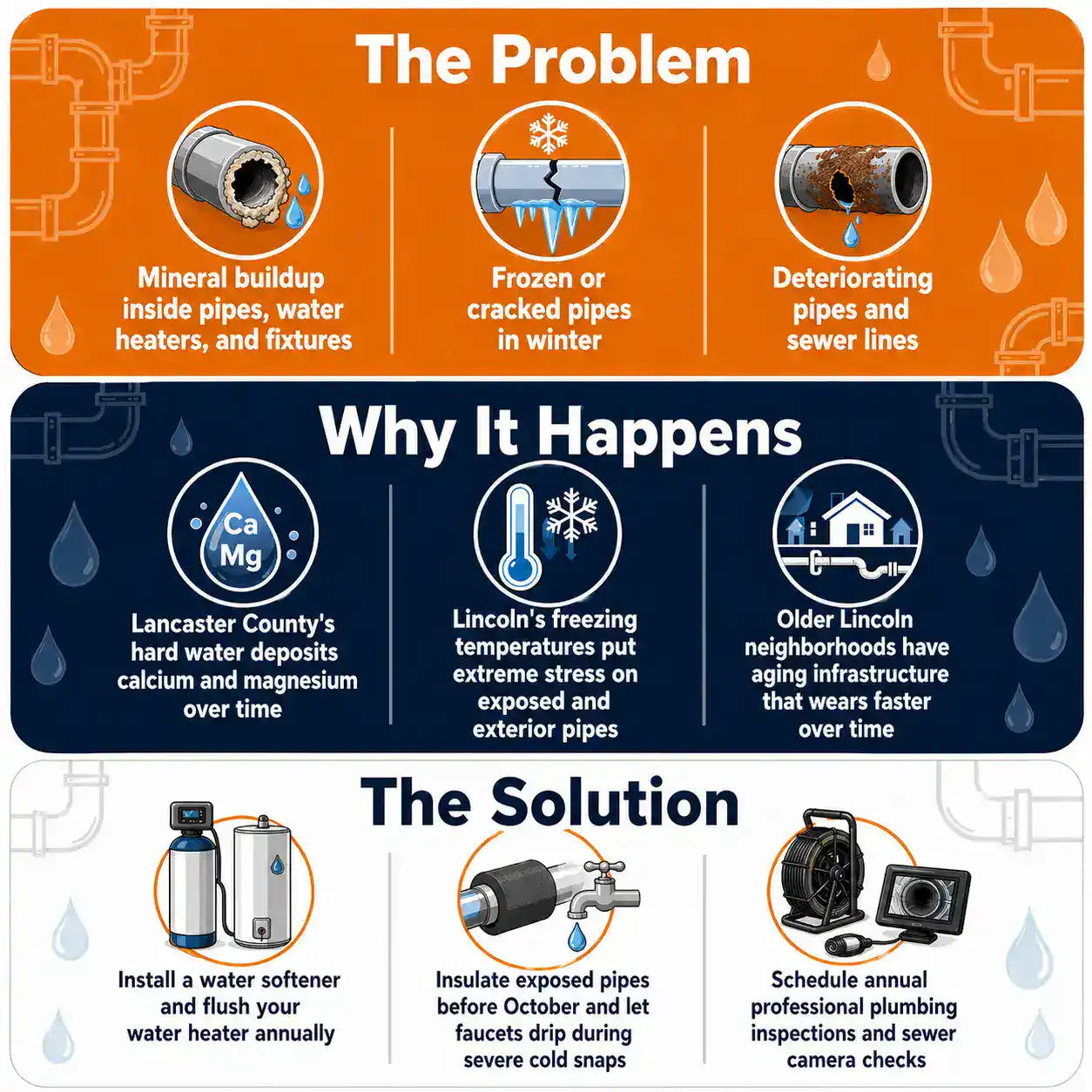
| Problem | Solution |
| Mineral buildup inside pipes, water heaters, & fixtures | Install a water softener and flush your water heater annually |
| Frozen or cracked pipes in winter | Insulate exposed pipes before October and let faucets drip during severe cold snaps |
| Deteriorating pipes and sewer lines | Schedule annual professional plumbing inspections and sewer camera checks |
| Shifting or cracked sewer lines | Have sewer lines inspected every year, especially in homes over 20 years old |
Why a Regular monthly routine Matters
Most plumbing disasters do not happen overnight. A burst pipe, a sewage backup, or a failed water heater almost always starts as a small, ignored warning sign weeks or months earlier.
Regular maintenance keeps your plumbing system healthy. If you run into an issue or prefer a professional multi-point assessment, you can easily schedule an appointment with a reliable plumber in Lincoln, NE to examine your home’s main lines.
How to Use This Checklist?
We have organized this checklist by frequency — what to check monthly, every six months, and annually. You can handle many of these checks yourself. Others are best left to a licensed plumber. We have clearly marked which is which.
Monthly Plumbing Cleaning & Inspection Checklist
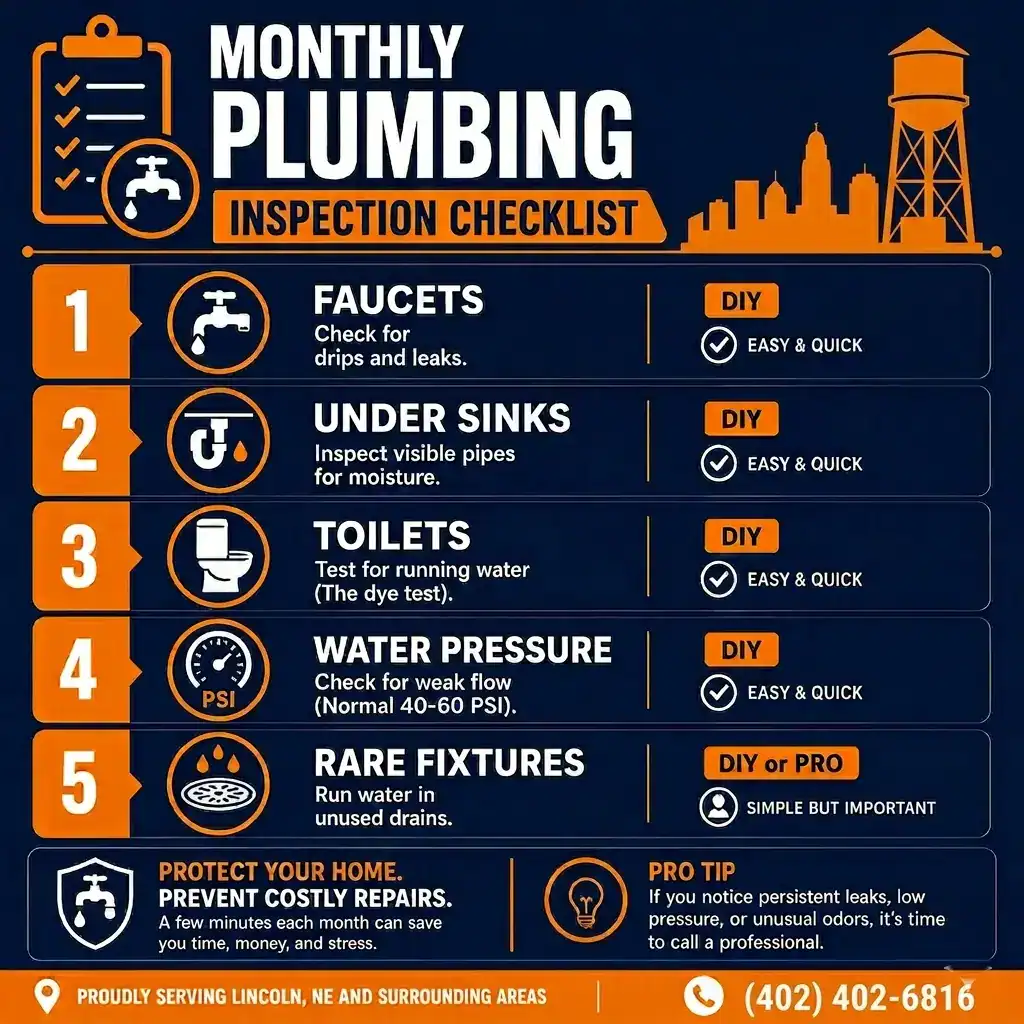
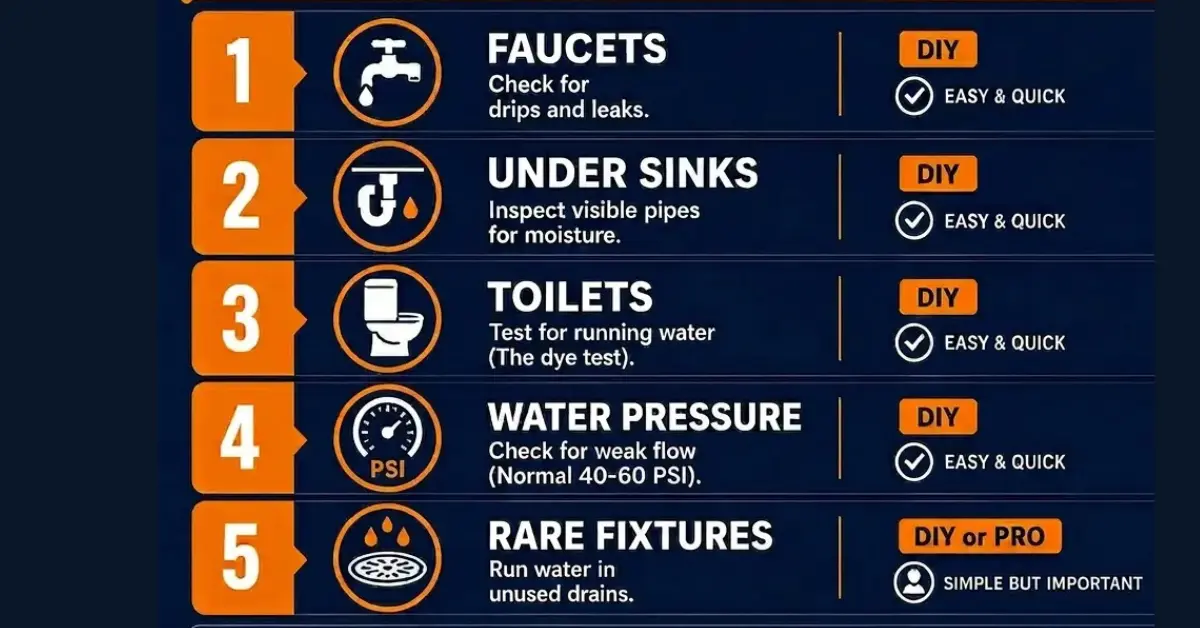
1-Check All Faucets for Drips and Leaks
Walk through every faucet in your home — kitchen, bathrooms, laundry room, and utility sink. A dripping faucet wastes more water than most people realize and usually signals a worn washer or valve seat that only gets worse with time.
What to look for: Dripping when turned off, slow drips around the base, water stains under the sink.
Do it yourself: Minor drips can sometimes be a DIY fix. Persistent or worsening leaks need a licensed plumber.
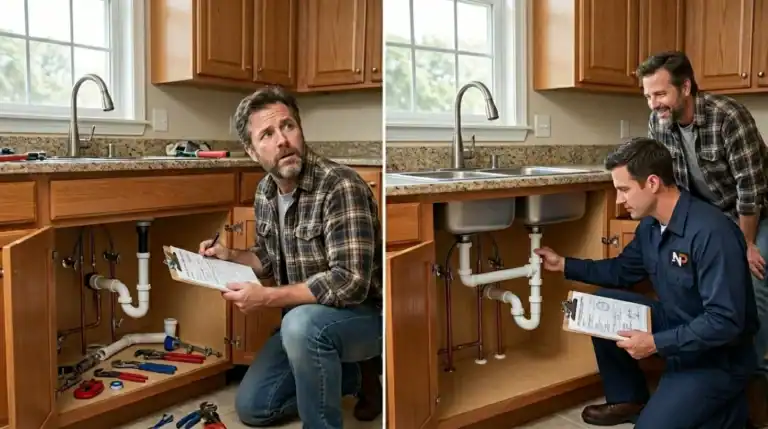
2-Inspect All Visible Pipes Under Sinks
Open the cabinet doors under every sink in your home and take a look. You are looking for moisture, rust, discoloration, or any sign of a slow leak.
What to look for: Water stains on the cabinet floor, rust on pipe joints, soft or warped cabinet wood, any dampness.
Do it yourself: Visual inspection is DIY. Any signs of moisture or rust require a professional assessment.
3-Test Every Toilet for Running Water.
A running toilet is one of the most wasteful and overlooked plumbing problems in Lincoln homes. To test yours, place a few drops of food coloring in the tank. Wait 15 minutes without flushing. If color appears in the bowl, your flapper valve needs to be replaced.
What to look for: Constant trickling sound, toilet that runs long after flushing, wobbling base, water around the base
Do it yourself: Replacing a flapper is a common DIY fix. A wobbling toilet or water at the base needs a plumber.
4-Check Water Pressure.
Low water pressure throughout your home is rarely just an inconvenience — it often signals a hidden leak, pipe corrosion, or a problem with your main water line. You can buy an inexpensive pressure gauge at any hardware store and attach it to an outdoor spigot for a quick reading. Normal residential water pressure in Lincoln should be between 40 and 60 PSI.
What to look for: Weak flow from multiple fixtures, pressure that has noticeably dropped recently.
Do it yourself: Testing is DIY. Diagnosing the cause of low pressure needs a licensed plumber.
5-Run Water in Rarely Used Fixtures.
Low water pressure throughout your home is rarely just an inconvenience — it often signals a hidden leak, pipe corrosion, or a problem with your main water line. You can buy an inexpensive pressure gauge at any hardware store and attach it to an outdoor spigot for a quick reading. Normal residential water pressure in Lincoln should be between 40 and 60 PSI.
Do it yourself: Just run the water.
Six-Monthly Plumbing Cleaning & Inspection Checklist
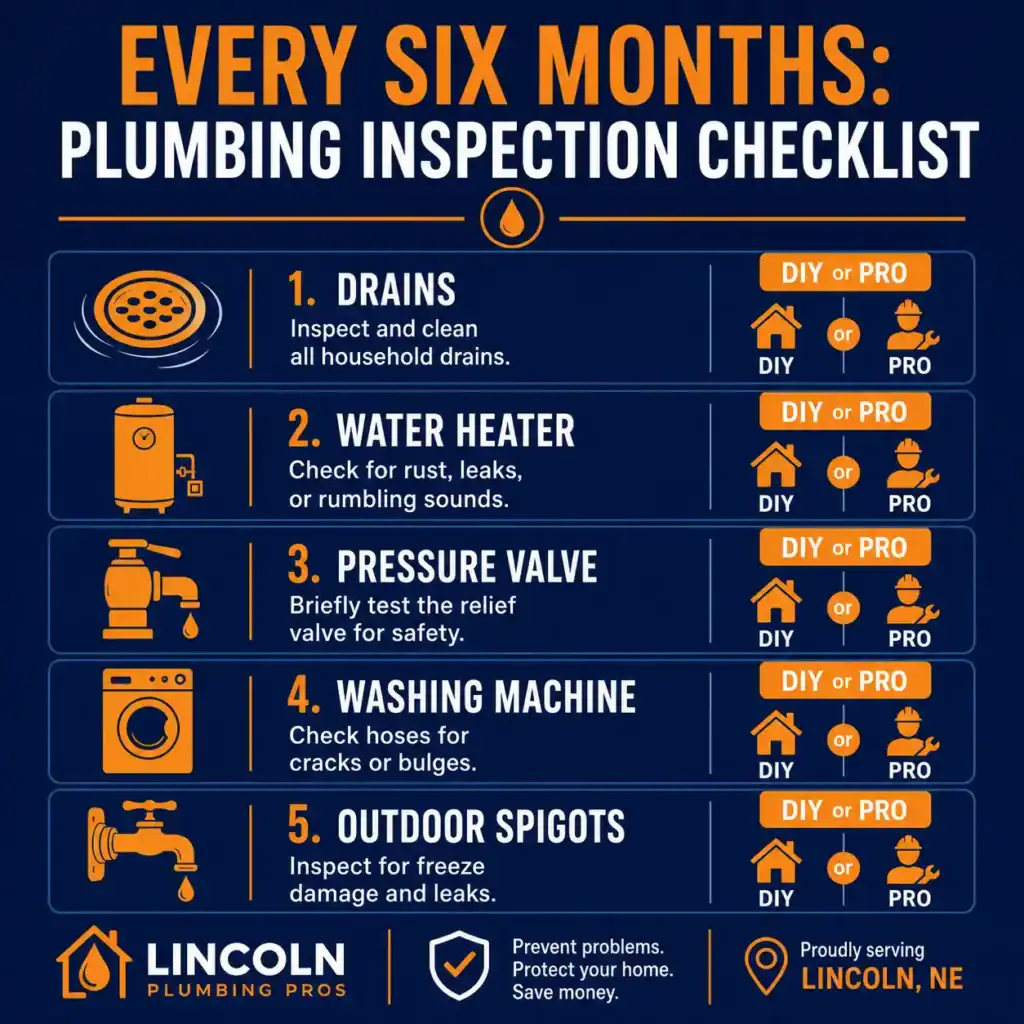
Inspect and Clean All Drains
Every drain in your home — kitchen, bathroom, shower, tub, laundry, and floor drains — should be checked and cleaned every six months. Slow drains are the earliest warning sign of a developing blockage.
What to look for: Slow drainage, gurgling sounds after water drains, foul odors from drains.
Do it yourself: Basic drain cleaning with a drain snake or natural cleaners is DIY. Persistent slow drains or gurgling require professional drain-cleaning equipment.
Check Your Water Heater
Your water heater works hard every single day. Every six months, give it a visual inspection and listen for any unusual sounds.
What to look for:
- Rust or corrosion on the tank or around connections
- Puddles or moisture near the base of the unit
- Popping, rumbling, or banging sounds from inside the tank
- Discolored or metallic-smelling hot water
- Longer than usual time to heat water
Do it yourself: Visual checks are DIY. Any of the above warning signs requires a licensed plumber to be addressed immediately — especially in Lincoln, where hard-water sediment buildup is a leading cause of early water heater failure.
This monthly and six-month routine pairs well with our fall plumbing checklist for Lincoln homeowners, which covers the seasonal fixes worth prioritizing before winter